GenAID at IRT Forum 2026: AI Readiness in Engineering and Product Development
Portorož, Slovenia | 9 June 2026
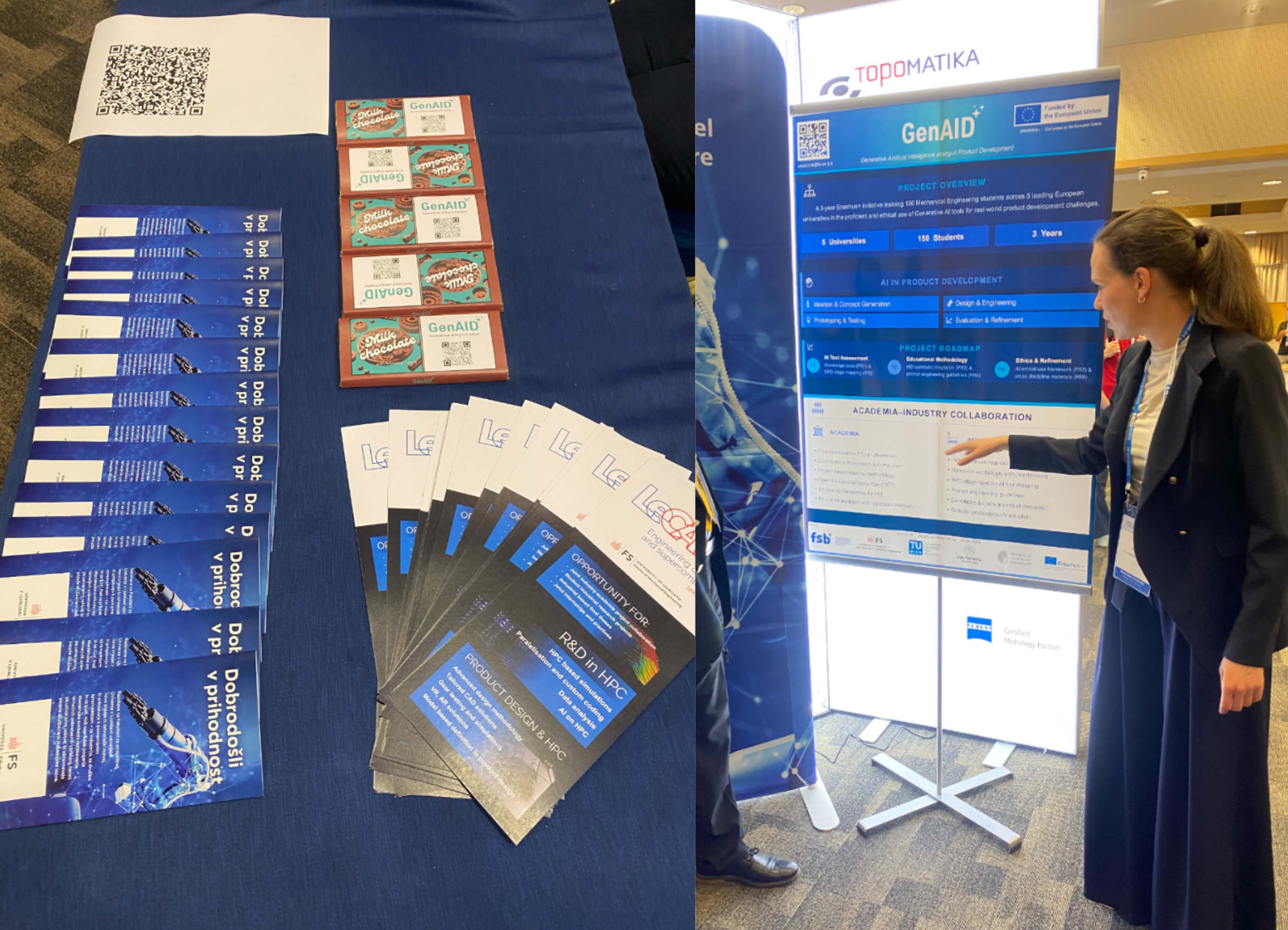
We spent two days at IRT Forum 2026 sharing how GenAID brings Generative AI into engineering education and product development, and gathering fresh insights from the field. This appearance was part of our ongoing dissemination and communication activities in WP2 .
What We Showcased
- GenAI across the development cycle: ideation, concept design, prototyping, testing, and evaluation.
- Practical emphasis on prompt engineering, critical assessment of AI outputs, and human-centered decision-making .
- Conversation around responsible adoption in both education and industry.
AI Readiness Snapshot
We ran a short, voluntary survey at our booth (exploratory sample of N = 5; 80% respondents from research/academia). While the sample is small, it offers timely signals on current readiness and needs.
Key Findings
- Readiness vs. Fluency: Average organisational AI readiness scored 6.2/9; personal AI fluency scored 5.2/9. Organisations appear to be moving faster than individuals feel prepared.
- Attitudes: Generally positive. Respondents expect GenAI to improve product development, with caution around reliability in safety-critical contexts.
Main Barriers to Adoption
- Top barrier: Lack of skills and training.
- Frequently cited: Data privacy and intellectual property concerns.
- Also noted (lower impact): Unclear ROI, regulatory uncertainty, and tool reliability.
Where AI Helps Today
- Most suitable: Documentation and reporting.
- Also promising: Market research, concept generation, regulatory compliance.
Preferred Operating Model
- Human-in-the-loop was preferred by all respondents—AI supports decisions; humans retain control and responsibility.
- Fully autonomous AI was not considered acceptable in this context.
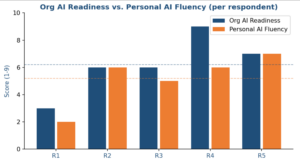
Figure 1: Organisational AI Readiness vs. Personal AI Fluency (per respondent)
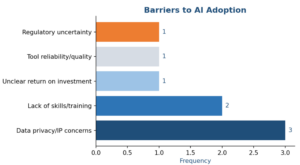
Figure 2: Barriers to AI Adoption
Engagement at the Forum
The IRT Forum gathered several hundred professionals from industry, research, and innovation. An ideal setting to exchange on practical GenAI use in engineering. Visitors picked up materials, joined discussions, and completed our quick survey, helping us align future course content and resources with real-world needs.
Why This Matters
- Close the fluency gap: Targeted training for engineers is essential.
- Build governance and trust: Clear policies for data/IP and transparent validation practices will accelerate adoption.
- Keep humans in control: Human-in-the-loop remains the preferred operational model for engineering contexts.
We’ll use these insights to refine our educational materials and methodology, and to guide upcoming activities and resources. Thanks to everyone who stopped by! We appreciate the conversations and feedback!